
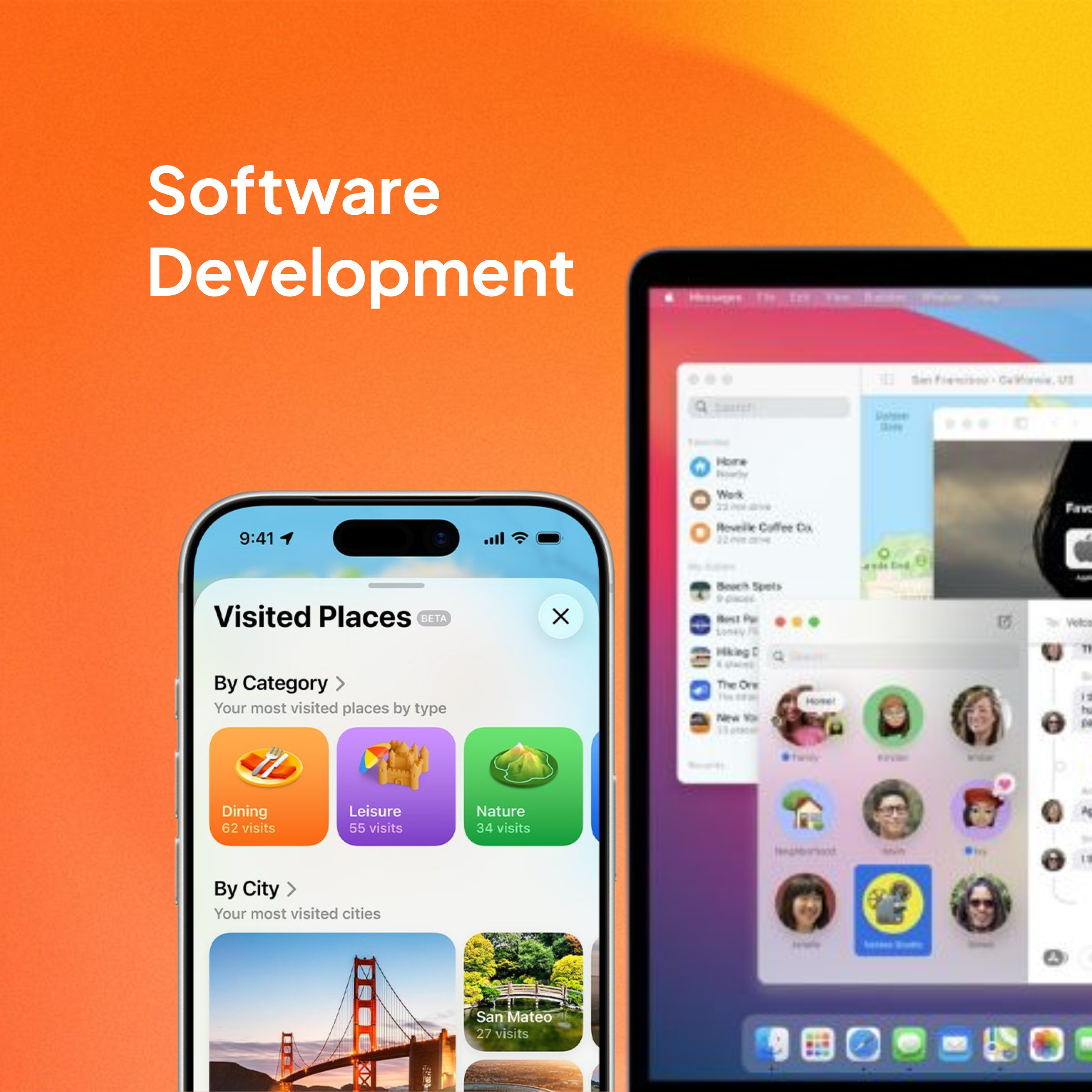







Enterprise Mobile App Development: Native iOS/Android vs. React Native & Flutter Guide
Mobile Architecture
An engineering evaluation framework for mobile product leaders. Analyze performance, rendering pipelines, native hardware bridges, and long-term maintenance costs.
Custom-Built
Turning your unique business aspirations into technology designed specifically around them.
Cloud-Native
Building digital foundations designed to scale, adapt, and evolve as your ambitions grow.
AI-First
Bringing practical intelligence into your products and operations where it can create meaningful impact.
No Vendor Lock-In
Creating flexible technology that keeps your business in control of its systems, data, and future.
Key Architectural Takeaways
Critical implementation principles for engineering leadership and technical stakeholders.
Takeaway 01
Technical Comparison: When to invest in Native Swift/Kotlin vs. unified Flutter or React Native codebases.
Takeaway 02
Offline-First Data Synchronization: Architecting local SQLite/WatermelonDB stores with optimistic background sync.
Takeaway 03
Biometric Security & Mobile CI/CD: Automated Fastlane build pipelines and cryptographic keychain management.
In-Depth Architectural Analysis
The Strategic Crossroad of Enterprise Mobile Development
Delivering high-converting mobile applications requires balancing user experience, rendering performance, and engineering resource allocation. Enterprise leaders must decide early: should the organization maintain separate native engineering teams for Apple iOS (Swift) and Google Android (Kotlin), or should it leverage unified cross-platform frameworks like Flutter or React Native?
Making the wrong architectural choice can lead to sluggish frame rates, delayed feature parity between platforms, or astronomical dual-codebase maintenance expenses.
Architectural Comparison: Native vs. React Native vs. Flutter
Evaluating frameworks requires understanding how each interacts with mobile operating system kernels:
- Pure Native (Swift / Kotlin): Direct compilation to platform machine code with zero bridge overhead. Delivers unmatched 120Hz scrolling performance, instant zero-day OS feature adoption, and seamless access to hardware sensors, Bluetooth peripherals, and on-device ML models.
- Flutter (Dart): Renders its own UI widgets directly onto the GPU canvas via the Impeller graphics engine. Eliminates OEM platform layout discrepancies and guarantees identical visual fidelity across iOS and Android.
- React Native (TypeScript): Bridges native UI components with modern JavaScript/Hermes runtimes. Ideal for teams with deep web development expertise who can share business logic, validation schemas, and state machines between web and mobile platforms.
Offline-First Architecture & Resilient Data Synchronization
Enterprise mobile applications deployed in field operations or logistics cannot depend on constant 5G connectivity. High-performing apps implement offline-first data architectures: local SQLite/WatermelonDB persistence, optimistic UI updates, and asynchronous conflict resolution via Last-Write-Wins or Operational Transformation.
Explore our mobile app development services to build scalable iOS and Android products.
Explore Related Publications
Actionable guides designed to help technical leaders make confident engineering decisions.

Autonomous AI Agents for Business: Architecture, LLM Tool Calling & Production Guide

Enterprise Cloud Migration Strategy: The Step-by-Step AWS, Azure & GCP Playbook

Bespoke Custom Software Architecture: Build vs. Buy Framework & Scalability Guide
Start With a Conversation
Connect with the Anvelos engineering team to discuss your software, AI, cloud, or digital transformation requirements. We’ll understand your business objectives, technical constraints, and priorities before outlining a practical path toward implementation.